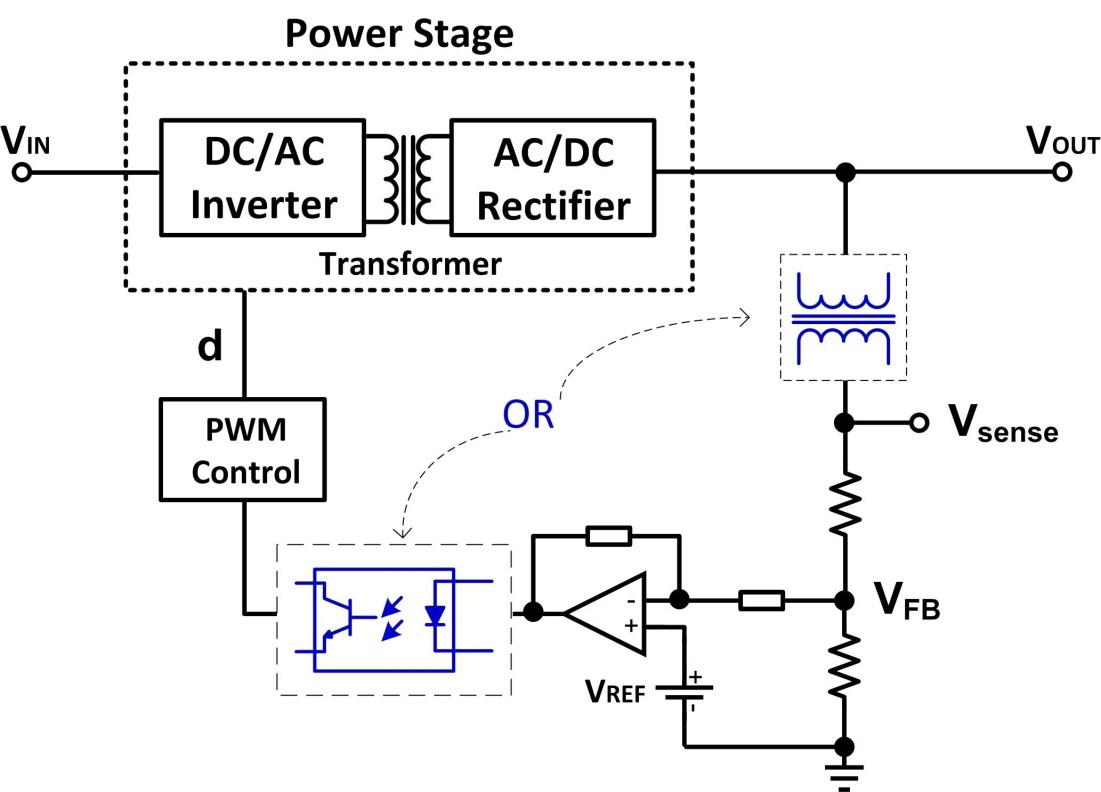
The Ultimate Guide to Understanding the Dc to Dc Converter Circuit Diagram DC to DC Converter 12v to 4KV Circuit: In circuits where two signal paths must be electrically isolated, use is often made of an Optocoupler. Unfortunately, these devices require two power supplies: one for the sender, and the other for the receiver. In industrial and professional undertakings this requirement is met by a proprietary.

A device's DC-DC converter is allowed to have functional insulation if: - The AC-to-DC power supply uses reinforced or double insulation between the AC input and DC output. - The AC-to-DC power supply uses basic or supplementary insulation, while the secondary circuit of the DC-DC converter connects to protective Earth.

DC DC Converter Complete Guide, DC DC Converter circuit Examples Circuit Diagram
Converter circuit topologies A large number of dc-dc converter circuits are known that can increase or decrease the magnitude of the dc voltage and/or invert its polarity [1-5]. Figure 4 illustrates several commonly used dc-dc converter circuits, along with their respective conversion ratios. In each example, the switch is realized using a power Types of DC-to-DC Converters 1: Magnetic Converters. In these DC-to-DC Converters, energy is periodically stored and released from a magnetic field in an inductor or a transformer. The frequency ranges from 300 kHz to 10MHz.By maintaining the duty cycle of the charging voltage the amount of power that needs to be transferred continuously to a load can be more easily controlled.
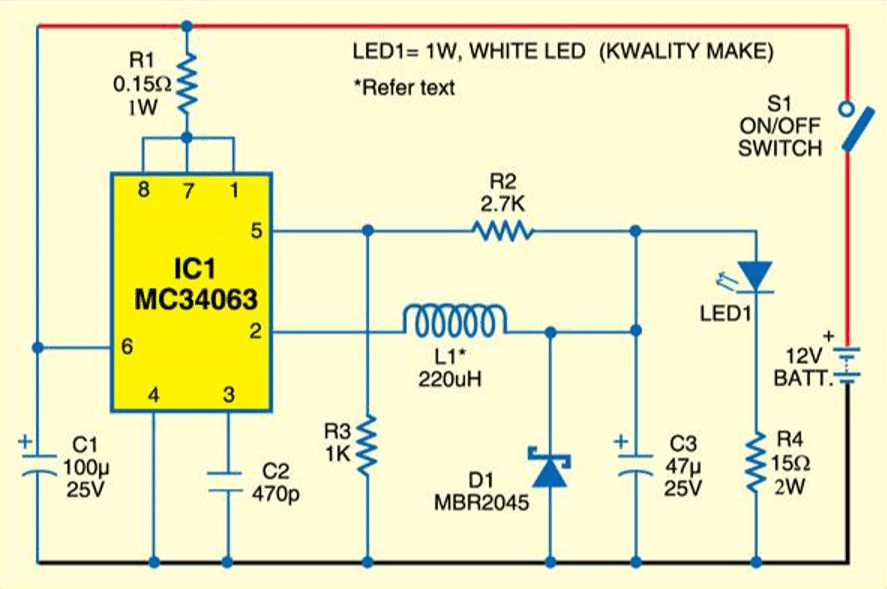
DC to DC Converter Circuit 1. This simple circuit lets you run a 1W LED from the battery of your car. IC MC34063 is used here as a buck converter. It is a monolithic switching regulator sub-system intended for use as a DC-DC converter. The device consists of an internal temperature compensated reference, a comparator, a controlled duty-cycle
DC Converters: Types, Uses, In Circuit Diagram
Some sample DC-DC converter circuit finished products are shown in Figure 2. A DC-DC converter can efficiently produce regulated voltage from a source that may or may not be controlled to a constant or variable load, thus ensuring proper system regulation in addition to the desired voltage level change. Figure 2. Sample DC-DC converters.
